Toward the tip
More of the comparative working bend is described toward the upper rod. The rest of the rod still joins in as the load changes.

THE BAMBOO ROD FIELD GUIDE
Where it bends. How it finds its rhythm. The reserve behind the cast. Three parts of a rod's character, considered together.
01 / BEND PROFILE
Bend Profile describes the relative distribution of the rod's working bend.
More of the comparative working bend is described toward the upper rod. The rest of the rod still joins in as the load changes.
The working bend extends through more of the middle: between a tip-oriented profile and a fuller distribution.
The bend is described as reaching more fully through the rod. Full describes its distribution, independently of tempo and power.
Illustrative catalog shapes, not measured deflection. The actual bend changes with the line, load and individual build.
02 / TEMPO
Tempo describes the relative rhythm of a rod loading and recovering. The stages stay the same; their pace is what the label describes.
A more deliberate loading and recovery rhythm in the catalog description. Line, load and casting stroke still affect the timing you feel.
The comparative rhythm between Slow and Quick. It is a description of pace, independent of where the rod bends.
A quicker comparative loading and recovery rhythm. Quick can appear with different bend profiles and power bands.
The storyboard and optional moving marker explain the idea of tempo. Their pace is illustrative, not a measured recovery time.
03 / POWER
Bend Profile asks where the rod bends. The idea behind Power is its relative reserve under load. A common reference makes the difference easier to see.
Light is the lighter end of the catalog's reserve descriptions. Use it alongside the stated line weight and the complete taper.
Medium sits between the lighter and heavier descriptions. It does not automatically mean an all-purpose rod.
Heavy is the heavier end of the relative descriptions. It is not the rod's physical weight, a fish-weight limit or a line-class substitute.
General power concept: comparable rods under the same illustrated load. ZHUSROD bands are relative catalog labels, not measured stiffness or safe-load ratings.
THE COMPLETE ROD
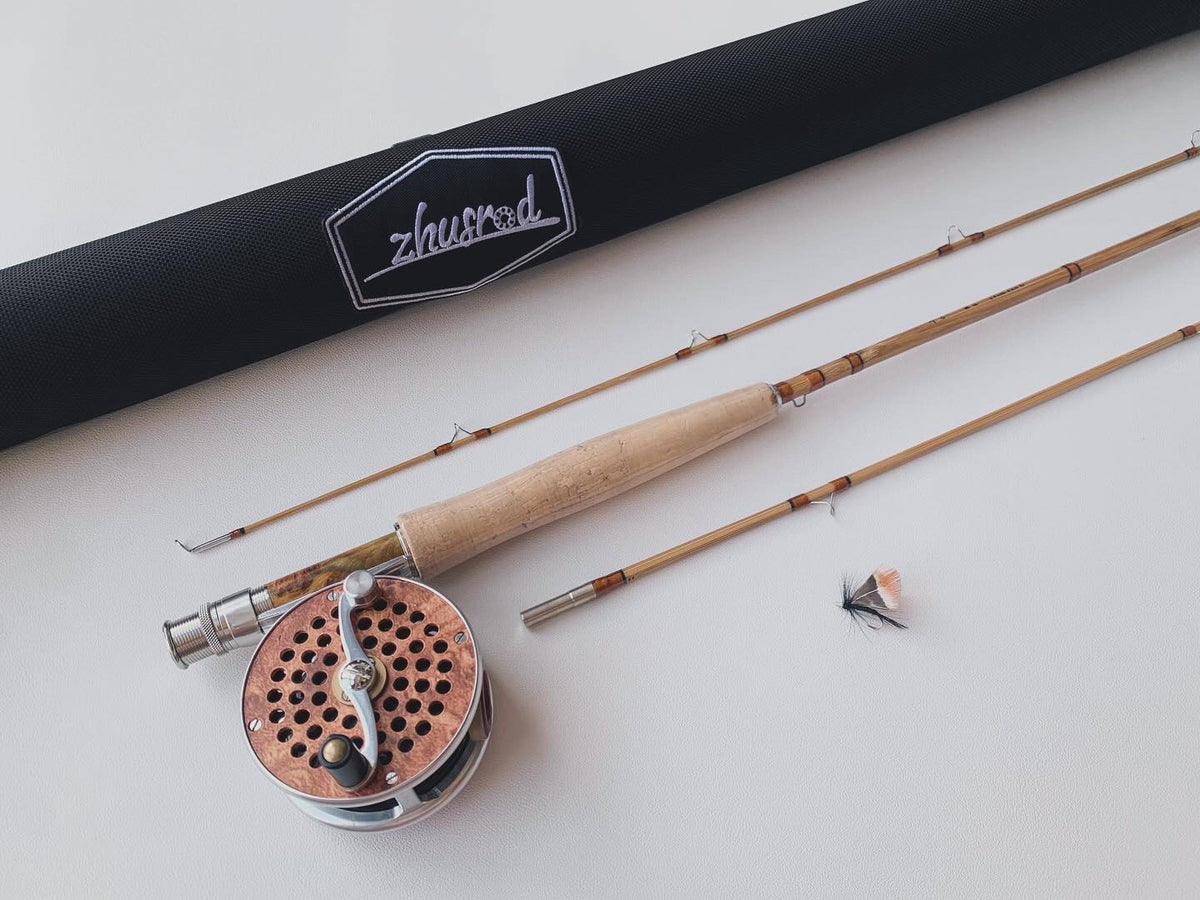
Bamboo fly rod action is easier to compare when bend, tempo and power stay separate. A full working bend does not automatically mean slow, and a heavy power description does not state a safe fish or line load.
Bring the three descriptions together with line weight, length and intended water.
In this guide, action is split into bend profile, tempo and power. Bend describes where the rod works, tempo describes loading and recovery, and power describes relative reserve under load.
No. Bend profile and tempo are separate. A rod can bend more deeply and still recover with a different pace. Read both descriptions rather than translating one legacy action word.
Compare the listed bend, tempo and power, then check line weight, length and casting range. Open the current product page for the exact build rather than relying on a general maker name.
YOUR NEXT ROD
Explore the taper, character and specifications of each build.
| 商品 | SKU | 説明 | コレクション | 在庫状況 | 商品タイプ | その他の詳細 |
|---|